
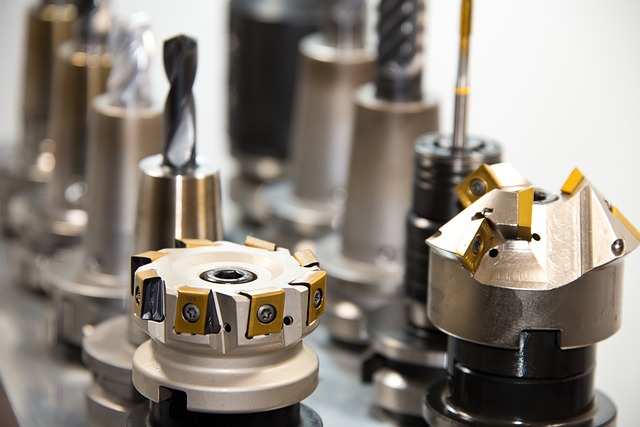
In today’s fast-evolving industrial landscape, companies across manufacturing, engineering, automotive, aerospace, construction, and technology rely heavily on precision components. As product standards continue to rise and tolerance requirements grow tighter, comprehensive CNC fabrication has become the backbone of industrial innovation. Modern CNC technology enables industries to push boundaries, reduce production time, and deliver unmatched product quality with consistent accuracy.
This article explores how CNC fabrication supports innovation, strengthens manufacturing capabilities, and drives efficiency across every industrial sector.
What Is Comprehensive CNC Fabrication?
Comprehensive CNC fabrication refers to the complete end-to-end process of producing parts using computer-controlled machinery. This often includes:
-
CNC milling
-
CNC turning
-
CNC cutting and routing
-
CNC drilling and boring
-
CNC grinding
-
Sheet metal fabrication
-
Welding and assembly
-
Surface finishing
-
Engineering support and prototyping
Unlike traditional machining, CNC fabrication offers repeatability, scalable production, and the ability to create complex geometries with high precision.
Why CNC Fabrication Drives Industrial Innovation
1. Exceptional Precision for Complex Components
CNC machines operate with digital accuracy, often reaching tolerances as tight as ±0.001 inches. This allows manufacturers to:
-
Create detailed and intricate designs
-
Produce highly consistent parts in every batch
-
Reduce defects, errors, and material waste
Such precision is essential in industries like aerospace, medical devices, electronics, and robotics.
2. Faster Production With Automated Efficiency
Automation is one of the biggest advantages of CNC machining. Once a design is programmed, machines can run continuously with minimal supervision. This leads to:
-
Shorter production timelines
-
Faster prototyping cycles
-
High-volume manufacturing with consistent quality
The result is a more agile production system capable of adapting to market demands.
3. Versatility Across Materials and Applications
CNC fabrication supports nearly every industrial material, including:
-
Aluminum, steel, stainless steel
-
Brass, copper, titanium
-
Plastics and polymers
-
Composites
-
Wood and specialty materials
This versatility allows industries to design innovative products without limitations.
4. Advanced Technology for Modern Manufacturing Needs
Today’s CNC machines integrate features like:
-
CAD/CAM modeling
-
Multi-axis machining
-
Automated tool changers
-
Smart sensors and real-time monitoring
-
High-speed machining technologies
These advancements support efficiency, customization, and improved production accuracy.
Industries That Benefit From CNC Fabrication
Aerospace & Defense
High-strength metals and tight tolerances are essential for safety and performance.
Automotive
From engine components to custom prototypes, CNC supports large-scale and custom manufacturing.
Electronics & Technology
CNC enables microfabrication and precision housings for advanced devices.
Construction & Heavy Equipment
Large and durable metal parts require precision cutting and fabrication.
Medical
Implants, surgical tools, and diagnostic equipment demand unparalleled accuracy.
CNC Fabrication Services That Support Innovation
A truly comprehensive CNC fabrication service includes a full suite of capabilities:
• Precision CNC Machining
Milling, turning, grinding, and drilling for custom parts.
• Sheet Metal Fabrication
Cutting, bending, forming, and welding for structural and functional components.
• Custom Prototyping
Rapid prototyping helps refine designs and accelerate product development.
• Assembly & Production
Mechanical assembly, component integration, and packaging.
• Engineering Consultation
Collaborative design support to optimize manufacturability and performance.
• Finishing Services
Powder coating, anodizing, polishing, sandblasting, and specialty coatings.
Benefits of Choosing a Comprehensive CNC Fabrication Partner
Choosing a fabrication provider with complete CNC capabilities helps businesses:
-
Reduce downtime and streamline workflow
-
Consolidate manufacturing processes under one provider
-
Ensure better quality control
-
Improve cost efficiency
-
Receive faster lead times
-
Scale production effortlessly
This holistic approach ultimately drives innovation and supports long-term growth.
Conclusion: CNC Fabrication as the Future of Industrial Innovation
As industries continue to transform, the demand for advanced manufacturing solutions will only grow. Comprehensive CNC fabrication stands at the center of this transformation, offering unmatched precision, speed, and flexibility.
Whether you need complex prototypes, high-volume production, or custom-engineered components, CNC fabrication provides the tools to innovate, optimize, and succeed in a competitive industrial environment.