
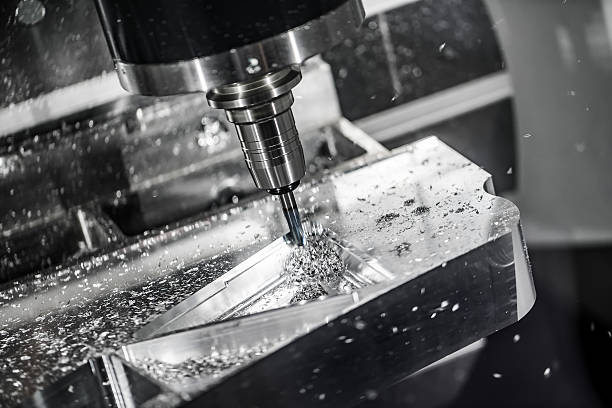
In the modern manufacturing landscape, durability, precision, and performance are no longer optional—they are essential. Industries operating in aerospace, automotive, medical, defense, construction, and high-tech sectors rely on components that deliver long-term reliability under extreme conditions. This is where precision engineered CNC components play a critical role.
Built with advanced machining technology and engineered with meticulous attention to detail, CNC-crafted parts set the standard for strength, consistency, and longevity. This article explores why CNC engineering is the top choice for mission-critical applications and how precision machining ensures components are built to last.
What Makes CNC Components So Reliable?
The strength of CNC manufacturing lies in its accuracy, automation, and repeatability. With computer-controlled cutting tools and multi-axis machining, CNC technology produces components that meet strict tolerance requirements and provide reliable long-term performance.
✔ Extreme Accuracy
CNC machines achieve tolerances as tight as ±0.001 inches, far surpassing traditional fabrication methods. This ensures flawless part mating, improved mechanical performance, and reduced failure rates.
✔ Consistent Repeatability
Once a design is programmed, CNC machinery can reproduce identical components hundreds or thousands of times without deviation—ideal for high-volume production and quality assurance.
✔ Superior Material Integrity
CNC machining supports a wide range of durable materials, including:
-
Stainless steel
-
Aluminum alloys
-
Titanium
-
Brass and copper
-
Tool steels
-
Engineered plastics
-
Aerospace-grade metals
Each material is precisely shaped without compromising structural integrity.
Engineered for Strength, Durability, and Performance
Precision CNC components are designed to handle heavy use, high pressure, vibrations, and harsh environments. Their durability makes them essential across industries that cannot risk component failure.
1. Built for Long-Term Wear Resistance
Precision machining minimizes weak points and ensures uniform surface finishes, enabling components to withstand:
-
Friction
-
Heat
-
Mechanical stress
-
Corrosion
-
Environmental exposure
This dramatically extends product life cycles.
2. Designed for Maximum Structural Reliability
Using optimized cutting paths and advanced engineering, CNC machining eliminates irregularities and internal stresses that could shorten component lifespan.
3. Enhanced Functionality Through Perfect Fit
High-tolerance machining ensures seamless interaction between moving parts, reducing the likelihood of breakdowns and improving overall system performance.
Applications That Demand Long-Lasting CNC Components
Precision-engineered CNC parts are used in critical systems where reliability is non-negotiable, such as:
Aerospace & Defense
Rotor parts, engine housings, brackets, airframe components, and weapon-system components require immaculate precision and durability.
Automotive & Motorsport
Performance engines, transmissions, suspensions, and custom aftermarket parts rely on CNC-machined components for long-term stability and efficiency.
Medical & Healthcare
Surgical instruments, implants, diagnostic devices, and lab equipment require biocompatible, precision-crafted parts to ensure safety and reliability.
Industrial Machinery
Gearboxes, pumps, robotics, and heavy manufacturing systems depend on CNC-engineered parts to keep operations running smoothly.
Electronics & Technology
Heat sinks, enclosures, connectors, and micro-components benefit from CNC accuracy and clean finishing.
How Precision Engineering Improves Component Longevity
✓ Optimal Design for Manufacturability
Engineers analyze part geometry, load distribution, and material properties to ensure each component is built for long-term durability.
✓ Multi-Axis CNC Capabilities
5-axis and 7-axis machining allow complex designs to be manufactured in fewer setups, enhancing accuracy and reducing stress points.
✓ Advanced Quality Control
Precision inspection tools—including CMM (Coordinate Measuring Machines), laser scanners, and digital metrology—guarantee every part meets exact specifications.
✓ Surface Finishing for Extended Lifespan
Finishing treatments help protect parts from corrosion, abrasion, and wear:
-
Anodizing
-
Powder coating
-
Polishing
-
Heat treatment
-
Passivation
-
Plating
Every detail contributes to long-term reliability.
Why Choose Precision CNC Components?
Selecting a partner that specializes in precision engineered CNC components ensures:
-
Better product reliability
-
Fewer operational interruptions
-
Lower maintenance and replacement costs
-
Superior performance under demanding conditions
-
A longer equipment lifespan
-
Higher efficiency and productivity
In industries where accuracy and strength matter most, CNC components provide unmatched value.
Conclusion: Built to Perform. Built to Last.
Precision engineered CNC components represent the highest standard in modern manufacturing. Their superior accuracy, durability, and repeatability support industrial innovation and ensure long-lasting performance across critical applications.
Whether you need high-volume production, custom engineering, or complex multi-axis machining, CNC technology delivers components that are truly built to last—today, tomorrow, and for years to come.