
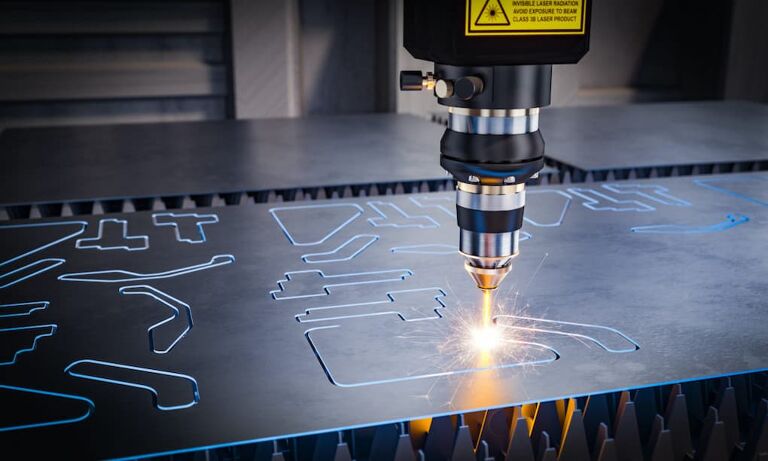
In an era where manufacturing demands continue to evolve, the need for components that deliver accuracy, endurance, and long-term reliability has never been greater. Precision engineered CNC components have emerged as the backbone of advanced manufacturing, delivering consistent performance across industries that rely on strength, stability, and structural integrity.
From aerospace to automotive, medical devices to industrial machinery, CNC-engineered components ensure that every part is built with unmatched precision and made to last—even under the toughest conditions.
The Power of Precision Engineering
Precision engineering is more than just machining parts; it is a discipline focused on accuracy, material integrity, and performance consistency. CNC (Computer Numerical Control) machining elevates this concept by combining innovative technology with meticulous engineering practices.
Why CNC Machining Creates Long-Lasting Components
✔ Ultra-High Accuracy
CNC machines operate with micro-level precision, achieving tight tolerances that manual methods simply cannot match. This ensures perfectly aligned geometry, smooth surfaces, and components that fit flawlessly in complex assemblies.
✔ Consistent Repeatability
Once a CNC design is programmed, it can produce identical components repeatedly—whether manufacturing 10 parts or 10,000. This consistency is essential for industries that require uniformity and dependability.
✔ Material Strength and Optimization
CNC machining supports high-performance materials engineered for longevity, including:
-
Titanium
-
Stainless steel
-
Aluminum alloys
-
Brass and bronze
-
Tool steels
-
High-performance polymers
These materials maintain structural strength throughout machining, making components exceptionally durable.
Designed for Durability—Built for Extreme Conditions
Precision CNC components are engineered to resist heat, friction, vibration, corrosion, and heavy mechanical loads. Their durability makes them ideal for demanding environments.
1. Wear Resistance Over Time
Smooth, accurate surface finishes reduce friction and wear, significantly prolonging component lifespan.
2. Structural Integrity Under Stress
CNC machining ensures uniform density and eliminates imperfections that weaken components—resulting in robust performance under intense pressure or rapid motion.
3. Reliability in High-Tolerance Applications
In mechanical systems where even a small deviation can cause failure, CNC components deliver stability and reliability.
Applications Where Longevity Matters
Certain industries rely on components that must perform flawlessly for years. CNC machining ensures every piece meets the highest standard.
Aerospace Engineering
Aircraft parts, rotor components, turbine housings, and structural brackets require exceptional strength and consistency. CNC machining ensures safety-critical performance.
Automotive Manufacturing
Precision-engineered components such as engine blocks, transmission brackets, pistons, and custom performance parts demand long-term endurance.
Medical and Healthcare Equipment
From surgical tools to implant-grade components, CNC machining ensures biocompatibility, precision, and long-lasting reliability.
Heavy Industrial Machinery
Gear systems, pump housings, machine components, and hydraulic parts depend on CNC durability to withstand daily industrial stress.
Electronics and Technology Production
Heat sinks, enclosures, motherboard frames, and micro-mechanical components rely on precision to function flawlessly.
How CNC Engineering Extends Component Lifespan
CNC machining integrates advanced engineering techniques to maximize performance and longevity.
✓ Multi-Axis Machining for Complex Designs
5-axis and 7-axis CNC machines create intricate geometries in fewer setups, preventing alignment errors and strengthening the entire component.
✓ Advanced Quality Control
Dimensional inspection, CMM measuring systems, and laser scanning ensure every part meets exact specifications before leaving the workshop.
✓ Enhanced Surface Treatments
To further extend component life, manufacturers apply:
-
Heat treatment
-
Anodizing
-
Passivation
-
Polishing
-
Plating
-
Powder coating
These treatments improve corrosion resistance, wear resistance, and overall strength.
Why Precision CNC Components Are the Best Long-Term Investment
Choosing precision-engineered CNC components offers benefits that extend far beyond the initial fabrication stage:
-
Reduced maintenance costs
-
Fewer breakdowns and mechanical failures
-
Longer equipment life cycles
-
Higher operational efficiency
-
Improved product performance
-
Greater reliability in mission-critical applications
CNC machining delivers not just components—but confidence.
Conclusion: CNC Components Built for Endurance
When longevity, precision, and reliability are essential, precision engineered CNC components set the standard. By combining advanced machining technology with industry-leading engineering, they ensure performance that stands the test of time.
Whether for aerospace-grade assemblies, industrial machinery, medical devices, or complex mechanical systems, CNC-crafted components are truly built to last—ensuring strength, stability, and performance in every application.